Ambigrams are calligraphic designs that can be read in multiple ways—typically by rotating, mirroring, or viewing from a different perspective.
Important Note
True ambigrams require specially designed letterforms. This content helps you visualize and experiment with transformations, but creating perfect ambigrams typically requires hand-drawn custom lettering where each character is crafted to read as another letter when transformed.
Related: Check this tool to create beautiful text in a heart shape that’s perfect for sharing — Heart Shape Text Generator.
180° Rotational Ambigrams
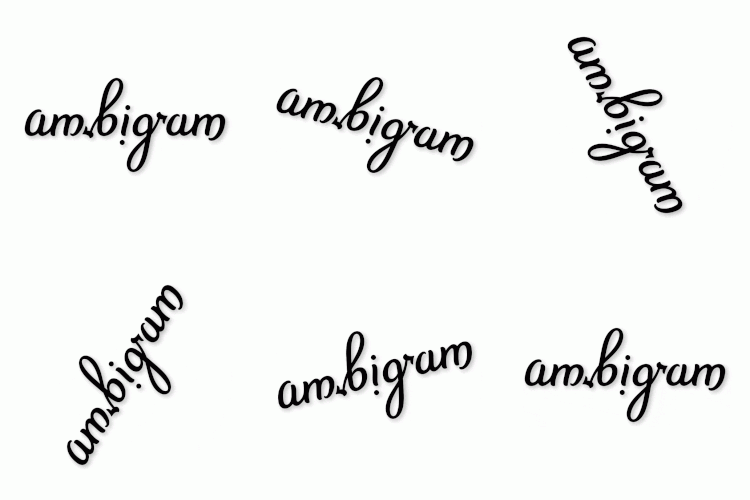
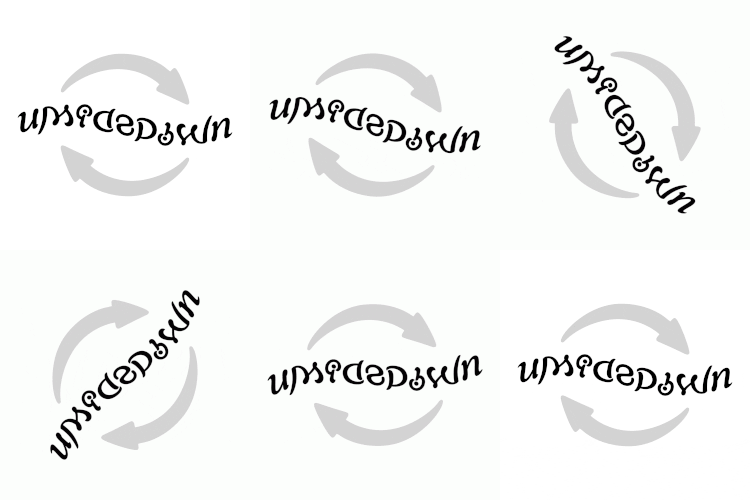
Can be read both right-side up and upside down.
Mirror Ambigrams
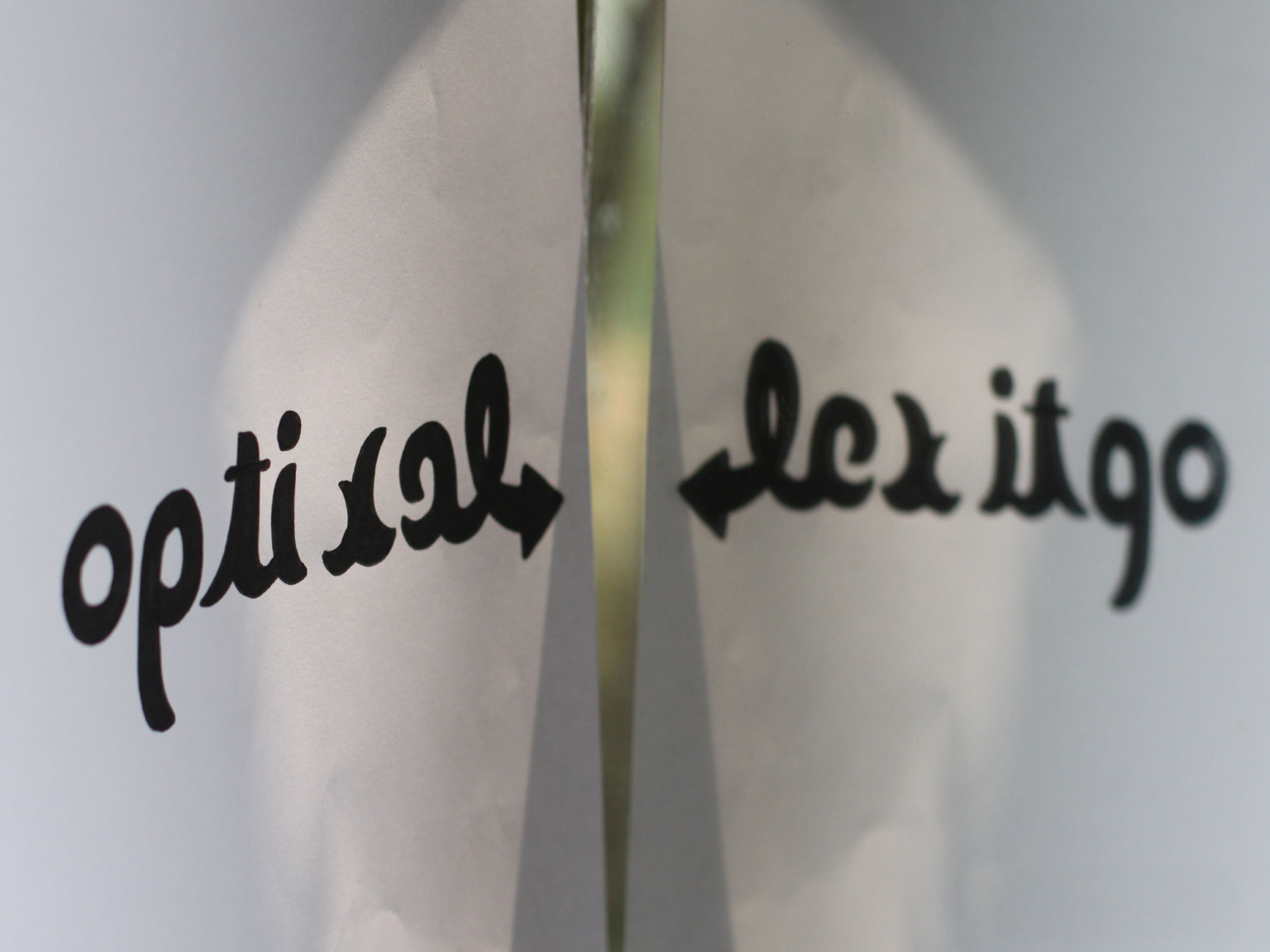
Can be read when reflected in a mirror or viewed from behind a transparent medium.
Ambigram Generator
Create beautiful ambigrams that can be read from different perspectives
Ambigram is a simple and online tool that takes any word or set of characters as input and gives them appropriate styling in a matter of seconds.
Personalize
You can customize your ambigram by resolution, background image color, and font Style.
Infinite Ambigrams
You can make infinite ambigrams—there are no limits.
Simple to Download
Download your Ambigram and share it easy with others!
Customize Your Ambigram
Negative values create tighter spacing for better ambigram effect
Try both cases – lowercase ‘n’ rotated looks like ‘u’
Advanced Effects
Helps letters blend together
Download Options
Ambigram Preview
Use the rotate button to see your ambigram from a different perspective
How It Works
Enter Your Text
Type one or two words to create your ambigram.
Choose Ambigram Type
Select between rotational (180°) or mirror (horizontal flip) ambigrams.
Customize Style
Select font, colors, and size to personalize your ambigram.
Download Your Creation
Save your ambigram as a PNG image to use anywhere.
What Is an Ambigram? (Perspective & Perception)
An ambigram is a form of typographic art designed so that a word or phrase remains readable when viewed from a different orientation—such as upside down, mirrored, or reversed.
In simple terms, it’s a visual illusion created using letters. Instead of standard fonts, ambigrams rely on:
- Customized letterforms
- Shape manipulation
- Visual balance
- Optical perception
The Gestalt Psychology Behind Ambigrams
Ambigrams work because of Gestalt principles—the way our brains recognize complete shapes even when they are distorted or partially hidden.
How your brain helps the illusion
- Fills in missing parts
- Recognizes symmetry
- Interprets patterns as letters
A Brief History of Ambigrams
The term “Ambigram” (1983) — Douglas Hofstadter
The word was officially coined in 1983 by Douglas Hofstadter, a scientist and author who explored self-reference, symmetry, and perception.
Famous Ambigram Artists
- John Langdon — known for intricate symmetrical designs
- Scott Kim — a pioneer in optical word art
Pop culture boost — Angels & Demons
Ambigrams became widely popular after appearing in Angels & Demons, where they symbolized opposing forces (Earth/Air, Fire/Water, Light/Dark).
Ancient roots — The Sator Square
Long before modern typography, ancient civilizations used symmetrical word puzzles like the Sator Square—often considered an early ancestor of ambigram-style symmetry.
7 Common Types of Ambigrams
1) Rotational (180°) Ambigrams
These designs read the same (or transform into another word) when flipped upside down. Popular because they’re easy to recognize and visually impressive.
Why they’re popular
- Easy to recognize
- Great for tattoos
- Highly “wow-factor”
2) Mirror (Bilateral) Ambigrams
These are readable when reflected in a mirror or flipped horizontally. Common uses include logos, prints, and symbolic designs.

Common uses
- Logos
- Artistic prints
- Symbolic designs
3) Chain Ambigrams
Words link to themselves repeatedly to form circular or tiled patterns—great for decorative art, repeating motifs, and backgrounds.
4) Symbiotograms (Word-to-Word Transformations)
These transform into a different word when flipped. They’re deeply symbolic and popular in tattoo culture.
Example ideas
- Life ↔ Death
- Love ↔ Hate
- Faith ↔ Doubt
5) Totem Ambigrams
Letters are stacked vertically with mirror symmetry—often used for minimalist logos, monograms, and emblems.
6) Figure-Ground Ambigrams
The negative space between letters forms new letters. This technique is common in professional logo design.
7) Oscillation Ambigrams
Depending on how your eyes focus, you see one word—then another. They rely heavily on visual perception tricks.
Why Ambigrams Are Popular (Tattoos & Branding)
Ambigram Tattoos (Dual Meaning)
People love ambigrams because they can represent two sides of life, transformation, balance, and hidden depth.
Popular themes include
- Family ↔ Forever
- Strength ↔ Faith
- Love ↔ Pain
Ambigrams in Logos & Branding
Some brands use ambigram principles for symmetry and memorability:
- Sun Microsystems logo reads “SUN” from multiple directions
- New Man uses mirrored typography
How to Design a Manual Ambigram (Step-by-Step)
-
Step 1: Letter Mapping
Write your word normally, then write it upside down or reversed below it. Match letters that can transform easily:
- n ↔ u
- b ↔ q
- p ↔ d
- m ↔ w
-
Step 2: Identify Common Shapes
Look for curves, stems, and loops that can overlap. Those shared shapes become the foundation of the ambigram.
-
Step 3: Choose the Right Font Style
Styles that “hide distortion” well:
- Gothic / Old English
- Calligraphy
- Script
- Serif / decorative serif
-
Step 4: Build the “Skeleton” First
Sketch simple shapes before drawing full letters. Refine into readable forms later—this is how many professional ambigram artists work.
FAQ
Can any word be an ambigram?
Most words can be turned into ambigrams, but some require advanced techniques like multi-letter flipping, shape merging, or symbolic transformations. Short symmetrical words are usually easiest.
What is the best font for ambigrams?
Fonts with curves and flourishes work best—gothic, Old English, script, and decorative serif styles—because they allow creative distortion without losing readability.
Are ambigram generators perfect?
Generators help visualize transformations quickly, but clean artistic ambigrams usually require custom, hand-designed lettering.
Can I use generated ambigrams commercially?
Often they’re free for personal use (tattoos, fun designs), but commercial branding may require custom design or licensing. Always check the specific tool’s usage policy.
Why Ambigrams Keep Fascinating People
Ambigrams sit at the crossroads of art, psychology, geometry, and typography. They challenge how we see language and prove that letters aren’t fixed—they’re flexible visual forms. Whether for tattoos, logos, puzzles, or pure creativity, ambigrams remain one of the most powerful visual illusions in typographic design.
Either I missed something or it’s not working
Same
Mirrored
Thank you for sharing us best Ambigram Generator keep it
Pretty good, worth a try
You’ve made some good points there. I looked onn
the internet for mire info about the issue and found most individuals
will go along with your views on this website.